
Best Chicken Water System: A Farm Guide by Flock & Housing Type
What Is the Best Watering System for Chickens? A Farm Guide to Choosing the Right Chicken Water System
Choosing the best watering system for chickens is one of the highest-impact decisions a poultry farm can make — yet it is often decided by habit instead of analysis. A chicken water system that does not match your flock size, bird age or housing type will cost you every single day: wet litter, ammonia burns, poor feed conversion, uneven growth and recurring disease. This guide compares the four watering systems used on commercial farms — nipple drinker lines, automatic cup drinkers, bell drinkers and gravity fountains — and shows you which one fits broiler, layer, brooding and free-range operations.
Why the Watering System Decides Flock Performance
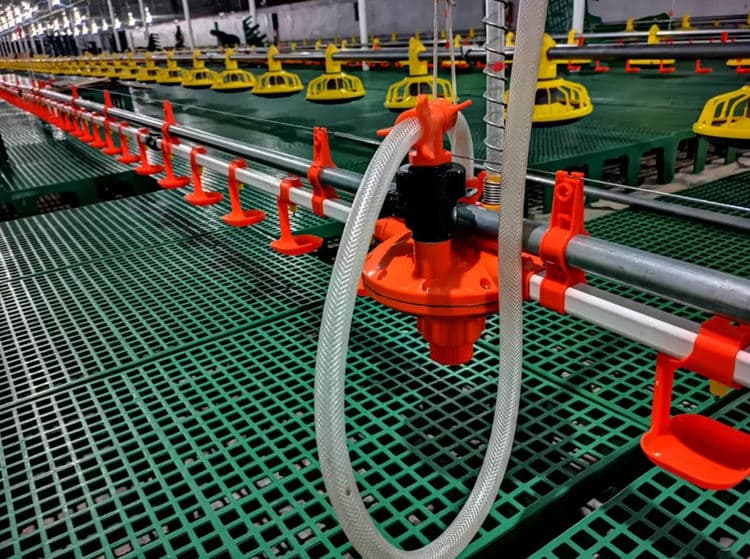
Water is the most essential nutrient a bird consumes. Broilers drink roughly twice as much water by weight as feed, and a laying hen drinks around 200–300 ml per day — more in hot weather and at peak lay. When water intake drops, feed intake drops within hours, and egg production or weight gain follows within days.
The hidden cost is hygiene. A poorly designed or poorly maintained waterer leaks, wets the litter, and drives up ammonia inside the house. Ammonia damages the respiratory tract, which makes the flock far more vulnerable to disease — and it directly hurts feed conversion. In other words: the watering system is not a plumbing detail. It is the daily battlefield where flock health is won or lost.
The 4 Main Chicken Water Systems Compared
| System | How it works | Best suited for | Main strengths | Watch out for |
|---|---|---|---|---|
| Nipple drinker line | Birds peck a 360° stainless or plastic nipple to release water from a pressurized pipe | Commercial broiler and layer houses, large floor flocks | Hygienic, water-saving, low labor, works with drip cups | Requires pressure regulation and correct line height |
| Automatic cup drinker | A trigger plate releases water into a small basin; refills automatically | Brooding, cages, and larger fowl such as ducks and geese | Visible water, easy to train chicks, big-capacity cups available | Cup and trigger need periodic cleaning |
| Bell drinker | A hanging bell with a valve that refills as birds drink | Medium farms, floor rearing, free-range and backyard flocks | Simple, robust, works without electricity | Open surface — litter and dust can contaminate water |
| Gravity fountain / starter waterer | A jar or bucket that releases water into a tray by vacuum | Day-old chicks in the brooding ring | Cheap, low water pressure ideal for chicks | Small capacity, must be refilled and cleaned daily |
Nipple Drinker Lines — the Standard for Commercial Houses
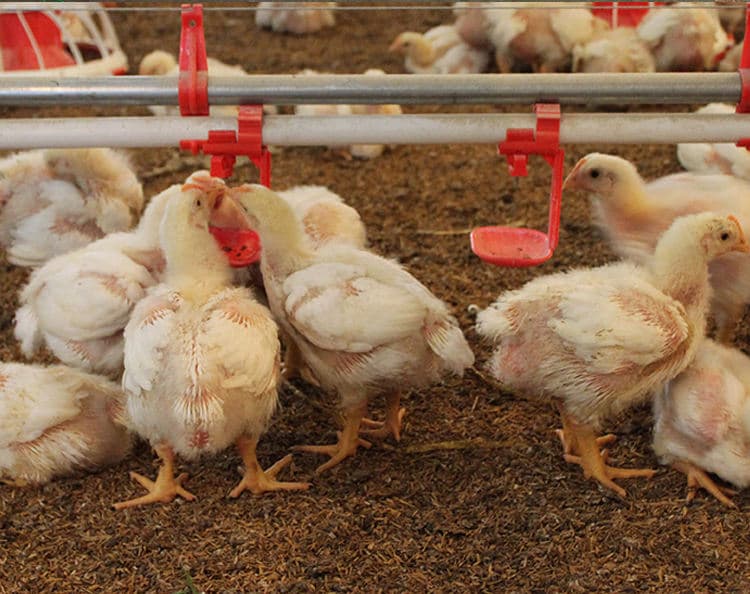
If you run a modern floor house with hundreds or thousands of birds, the nipple drinker line is the closest thing to an industry standard. Because water is delivered on demand and never left standing, litter stays drier, and dry litter means lower ammonia and fewer footpad lesions — a quality issue that processors increasingly penalize. Stainless steel nipples with a 360° trigger are preferred in larger operations: they resist corrosion, trigger from any angle, and handle years of constant pecking.
As a rule of thumb, commercial manuals specify roughly one nipple for every 8–12 broilers on the floor. Lines are usually raised as the flock grows so birds drink at a natural 45° angle rather than stretching upward.
Automatic Cup Drinkers — Easy Training, Good for Chicks and Larger Fowl

Cup drinkers hold the advantage that the bird can see the water. Chicks learn to drink within the first day, which matters most in the brooding period. The cup fills automatically when the bird pecks the trigger, so labor stays low.
Where cup systems really stand out is versatility. Large-capacity cup drinkers (such as the big red cups with a yellow trigger) are made not only for chickens but for ducks and geese, whose wider beaks struggle with nipples. This makes the automatic cup drinker a practical choice for mixed poultry farms that raise several species under one roof.
Bell Drinkers — the Reliable Workhorse for Medium Farms
Bell drinkers — often called Plasson-type drinkers — are a familiar sight on medium-scale and free-range farms. They are simple to hang, adjust and clean, and they keep working with minimal technical skill. The trade-off is the open water surface: litter and dust blown into the bell can carry disease, so bells should be cleaned regularly and repositioned as birds grow.
Gravity Fountains — the Right Tool for the First Weeks Only
For day-old chicks in the brooding ring, a low-pressure fountain is deliberately simple. The shallow tray is ideal for tiny birds and easy for farm staff to wash and refill several times a day. Once chicks are about two weeks old and drinking more, move them onto a nipple or cup system sized for growing birds — otherwise you will be refilling trays all day.
Which Chicken Water System Fits Your Farm?
| Your situation | Recommended system | Why |
|---|---|---|
| Brooding chicks (0–2 weeks) | Gravity fountains, then mini cups or low-pressure nipples | Gentle water access, easy training |
| Commercial broilers on floor | Stainless steel nipple drinker line | Drier litter, better feed conversion, less labor |
| Layers in cages | Nipple lines with drip cups, or one cup drinker per cage | Prevents wet droppings and keeps eggs clean |
| Medium / free-range farm | Bell drinkers, supplemented by cup drinkers | Robust, low maintenance, no power needed |
| Mixed flock incl. ducks or geese | Large automatic cup drinkers | Wide-beak birds can drink comfortably |
Plastic, Stainless Steel or Metal — the Material Question
The same design exists in different materials, and the material decides the real cost of the system over its life.
- Stainless steel is the professional choice for nipples and drinker components in high-density houses. It does not corrode, is easier to keep clean, and typically outlasts several plastic replacements — which is why the payback period matters more than the purchase price.
- Plastic (PP/ABS) components are lightweight, affordable and immune to rust. Modern UV-stabilized plastics perform well in cup drinkers, bells and pipework, and are the most common choice for medium farms.
- Galvanized or painted metal appears in budget trough and bell designs. It can serve smaller operations, but rust and coating wear over time make it a poor fit for humid houses.
A practical approach for buyers: match the material to the intended service life. If you plan to run the house for a decade, invest in stainless where birds touch the water — it is the cheapest option per year of service.
Setup and Maintenance Rules That Keep Birds Drinking
A watering system fails in two ways: mechanically, or through neglect. Both are preventable.
- Set the height correctly. Nipple lines should be raised so birds drink with the neck at about a 45° angle; cups and bells sit at back height. Check twice a week as birds grow.
- Regulate water pressure. Too high, and nipples drip and wet the litter; too low, and the back of the line runs dry. Use a pressure regulator and check the last nipple in each line daily.
- Inspect nipples every morning. A blocked nipple is invisible from outside — run your hand under each row and replace any nipple that fails to trigger.
- Flush the lines and clean cups weekly. Biofilm and algae build up fast in warm weather and carry bacteria into every drink.
- Protect the system in winter. Drain or insulate exposed lines in cold climates; frozen lines are the leading winter cause of flock dehydration.
Final Recommendation: There Is No Single “Best” — Only the Best Fit
Ask any farm consultant and they will give the same answer: the best watering system for chickens is the one matched to your flock stage, house type and labor. For the modern commercial operation that means a complete nipple drinker line; for brooding and mixed or medium-scale farms, automatic cup drinkers and bell drinkers remain the most practical choice — and for ducks and geese, the large automatic cup wins outright.
What every farm should insist on, regardless of type, is clean, always-available water from durable, easy-to-service equipment — because watering is not the routine part of poultry farming. It is the part that decides everything else. Start from your real conditions, set the system up properly, and check it every morning: your birds will return the investment in weight gain, egg output and flock health.


