
Cattle Feed Trough Guide: Steel vs Plastic vs Concrete
Buying a cattle feed trough looks like a simple purchasing decision, yet the wrong material shows up months later as cracked plastic, rusted steel, or silage wasted on the ground. Feed troughs are permanent infrastructure for most beef and dairy operations: they influence daily labor, feed conversion, and even herd health. This guide compares the three materials you will actually be offered — galvanized steel, plastic, and concrete — and helps you match the trough to your herd size, feeding system, and climate.
Why the Feed Trough Choice Affects Herd Performance
A feed trough does more than hold feed. It controls how much feed is wasted, how easily it can be cleaned, and how safely cattle can access it.
Feed waste is the quiet cost. A trough that is too shallow, too light, or easily tipped lets cattle push feed onto the ground, where it is contaminated and lost. On a large herd this waste compounds quickly. Penn State Extension also recommends a solid, hardened surface — concrete flatwork or a proper feed bunk — around the feeding area specifically to keep feed contained and prevent cattle from consuming debris.
Hygiene affects intake. Residual wet feed and manure buildup in cracked or hard-to-clean troughs encourage mold and disease. Smooth, cleanable surfaces reduce this risk significantly.
Social behavior matters. Cattle have a clear pecking order. If bunk space is short, lower-ranking animals — often young, growing heifers — eat less and underperform. Penn State Extension cites bunk space of 24–30 inches per mature 1,000-lb cow when feed access is limited to once daily, and 12–15 inches when fed twice daily. Your trough length must be planned against these figures, not guessed.
Cattle Feed Trough Materials Compared
Galvanized Steel Feed Troughs
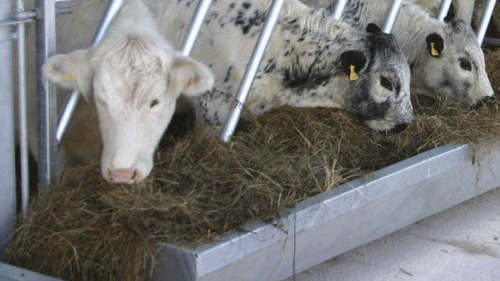
Galvanized steel is the workhorse choice for beef operations that need strength and mobility.
- Pros: High impact strength — mature cattle cannot easily tip or crush a well-built steel trough; long service life (typically 10+ years with galvanized coating); portable when fitted with skids; resists chewing and rubbing damage better than wood or plastic.
- Cons: Higher upfront cost than plastic; galvanized coating can wear in abrasive or high-moisture conditions and eventually rust; sharp edges on cheap fabrications are a safety hazard; metal conducts cold, which matters in extreme winter climates.
Plastic and Poly Feed Troughs

Rotomolded polyethylene troughs have become popular for sheep, calves, and smaller herds.
- Pros: Lightweight and easy to move; corrosion-proof and easy to clean; lower initial cost; smooth, rounded edges are safer for young stock.
- Cons: Mature cattle can crack or flip lighter models; UV exposure makes plastic brittle over time, shortening service life outdoors; heavy bulls and aggressive feeders are a poor fit. Wall thickness and weight are the key quality indicators — a bargain trough is usually a thin one.
Concrete Feed Troughs
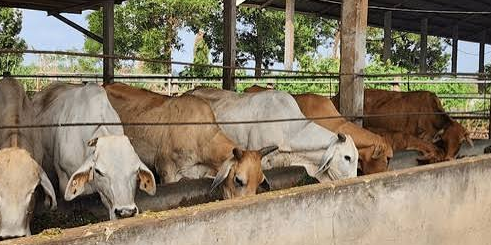
Concrete is the standard for permanent feed bunks in feedlots and confinement barns.
- Pros: Extremely long lifespan; cannot be tipped or moved by cattle; ideal for long, fixed feeding lines; low maintenance when properly finished.
- Cons: Permanent — impossible to relocate when your pen layout changes; higher initial cost including site preparation; needs smooth finishing to avoid injuring cattle; can crack under freeze-thaw cycles if poorly constructed.
Quick Comparison Table
| Factor | Galvanized Steel | Plastic / Poly | Concrete |
|---|---|---|---|
| Service life | 10+ years | 5–10 years (UV-dependent) | 20+ years |
| Upfront cost | Medium–High | Low–Medium | High (incl. installation) |
| Portability | Portable (skids) | Very portable | Fixed |
| Strength vs mature cattle | Excellent | Moderate | Excellent |
| Ease of cleaning | Good | Excellent | Good |
| Best fit | Beef herds, outdoor feedlots | Sheep, calves, small herds | Large permanent feeding lines |
How to Match the Feed Trough to Your Operation
There is no single "best" cattle feed trough — there is only the right fit for your system. Work through these four questions:
1. What class of animal will use it? Mature beef cows and bulls need steel or concrete; lambs, goat kids, and calves are fine with — and safer with — well-made plastic. Mixing cattle classes on one trough type usually ends in damaged equipment.
2. How many head per pen, and how often do you feed? Calculate total required bunk length first. Example from Penn State Extension: a 200-head cow herd fed twice daily needs roughly 250 ft of linear bunk space (15 in/head). Buying troughs before calculating linear footage is the most common mistake we see in new barns.
3. Fixed or portable feeding? If you rotate pastures, bale-graze, or remodel pens often, choose steel or heavy plastic on skids. If your feeding line never moves, concrete delivers the lowest lifetime cost per foot of bunk.
4. What is your climate? Intense UV shortens plastic life; coastal or high-humidity conditions accelerate steel corrosion; freeze-thaw regions punish poorly built concrete. Match the material to the environment, not only to the price tag.
Installation and Placement Tips
- Set the height to the animal. The top edge should be near shoulder height of the target class so cattle do not reach down and toss feed, and cannot step a front leg into the trough.
- Harden the standing surface. Penn State Extension stresses concrete flatwork under and around the feeding area to keep feed off the ground and out of the mud.
- Secure portable units. Even a heavy steel trough can be dragged by a bored bull — anchor or block portable troughs in permanent feeding spots.
- Check edges and welds. Insist on rolled or ground edges; a sharp lip injures tongues and hides over time, and that is a vet bill you do not want.
- Plan for expansion. Build bunk length for the herd you intend to have in five years, not the herd you have today.
The Professional View
From a manufacturer's perspective, buyers almost always under-size — not over-size — their trough investment. They compare unit prices between steel and plastic, when the real calculation is cost per inch of usable bunk space across the trough's lifetime, plus the value of feed not wasted. For permanent confinement feeding, concrete usually wins; for flexible beef operations that move cattle and equipment, galvanized steel on skids is the most defensible purchase; plastic earns its place with sheep, young stock, and smallholders who need portability and easy cleaning above all.
Whichever material you choose, decide the bunk length before you compare prices, and buy troughs whose edges, weight, and coating match the animals that will live with them for the next decade.
For authoritative guidance on bunk space, see Penn State Extension's Beef Cow Pen and Bunk Spacing Requirements (updated January 2024), which cites the FASS Guide for the Care and Use of Agricultural Animals.


