
Livestock Heat Lamp Safety: Wattage, Distance, Fire Prevention
A livestock heat lamp is one of the most useful — and most dangerous — pieces of equipment in a winter barn. Hanging a 250 W lamp over newborn piglets or day-old chicks can mean the difference between a thriving litter and a heartbreaking loss. But every year, barn fires start the same way: a heat lamp tied up with twine, placed too close to bedding, or left on overnight. The good news is that heat lamp accidents are almost entirely preventable. This guide covers bulb selection, correct hanging distance, secure installation, and the fire-safety habits that protect both your animals and your buildings.
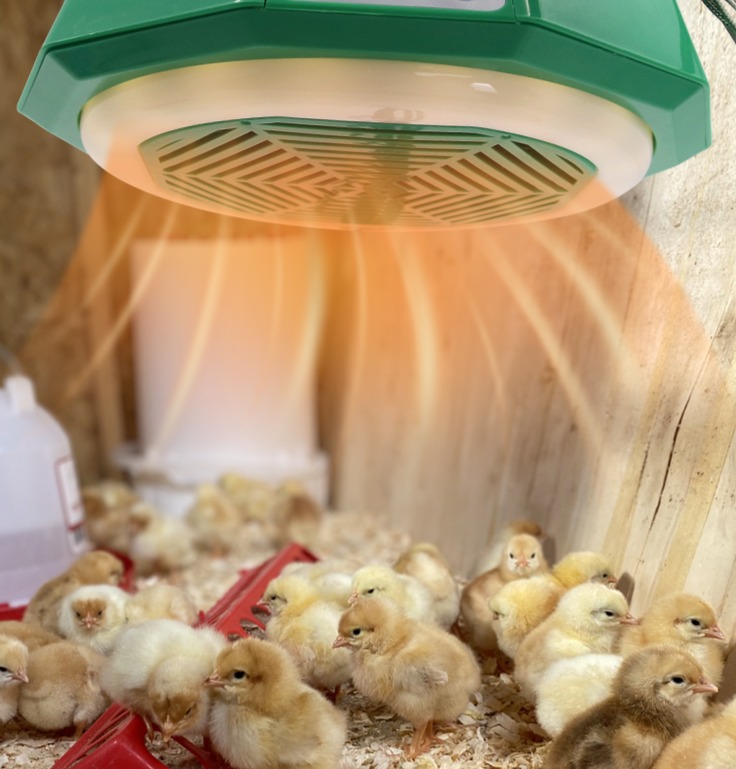
Why Heat Lamps Start Barn Fires
A heat lamp concentrates radiant energy in one spot. Straw, sawdust, paper, and even dried manure can ignite if the bulb comes within a critical distance — or if the lamp falls from a poorly secured fixture. Combine that with a wooden barn, and a small mistake becomes a total-loss fire within minutes.
The core rule is simple: a heat lamp must always be treated as a fire source, not just a heat source. Every placement, wattage, and wiring decision should be made with that in mind.
Choosing the Right Bulb and Wattage
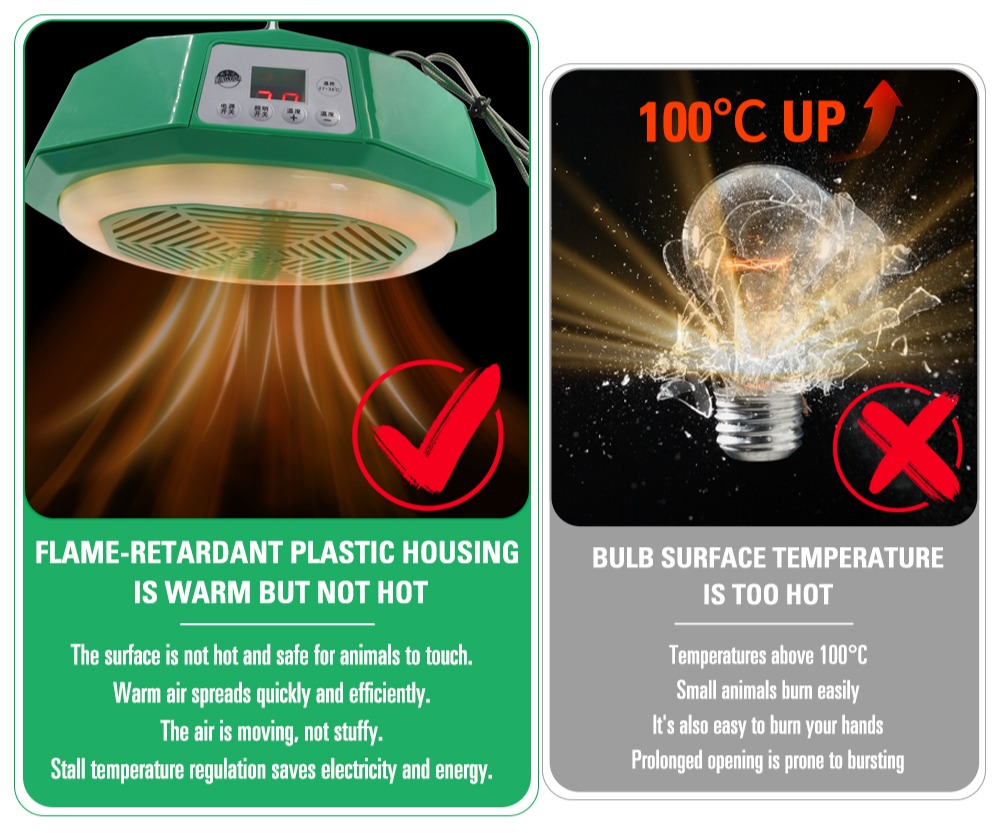
Stay at or below 250 W for standard single-bulb fixtures. Ohio State University Extension's agricultural safety team explicitly advises avoiding bulbs over 250 W — higher wattage dramatically raises surface temperature and ignition risk.
When buying bulbs, quality matters:
- Use heat-resistant, shatter-resistant bulbs. Thin-glass bargain bulbs can shatter from heat stress or moisture, dropping hot glass onto bedding.
- Match the bulb type to the animal. Quartz infrared lamps warm quickly and suit small brooding areas. Explosion-proof (shatter-proof) piglet lamps resist impacts and thermal shock in farrowing crates — the safest choice where animals can reach the fixture.
- Buy a lamp with a protective guard. An enclosed heat lamp with a wire guard keeps animals from touching the hot bulb and keeps the bulb from touching bedding if it swings.
- For outdoor or damp locations, choose fixtures labeled for outdoor use.
Hanging Distance: The 20-Inch Rule
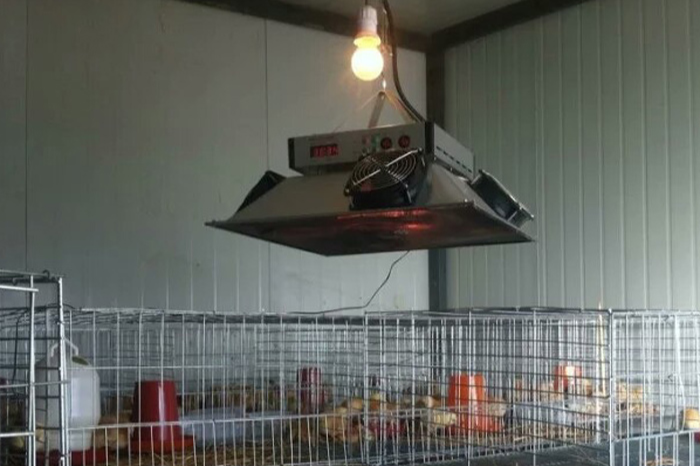
OSU Extension recommends a minimum distance of 20 inches (about 50 cm) from the lamp to the ground or to the animals. Less than that, and bedding can ignite or animals can be burned.
Practical checks:
- Hang the lamp high enough that adult livestock cannot reach, head-butt, kick, or bash the fixture.
- Raise the lamp as animals grow — a 20-inch clearance at chick height is not the same as at mature-pig height.
- Create a temperature gradient: the area directly under the lamp should be warm, with cooler zones nearby so animals can move away when they are warm enough. If animals crowd constantly under the lamp, lower it slightly; if they avoid the area entirely, raise it or reduce wattage.
Secure Installation Is Non-Negotiable
The most common cause of heat lamp fires is a lamp that falls. Never suspend a lamp with baler twine, string, or wire that can fray or burn through.
- Secure the lamp to a panel or rail with chain or a heat-lamp clamp designed for the purpose.
- Position it so it cannot swing into a wall, partition, or feeder.
- Check the fixture regularly: bulbs can loosen in their sockets from vibration, and clamps can work loose.
- Never lay a heat lamp on a flammable surface — even "temporarily."
Electrical Safety in the Barn
- Plug heat lamps into an Arc Fault Circuit Interrupter (AFCI) breaker, which trips if the fixture sparks.
- Use heavy-duty cords rated for the wattage; avoid daisy-chaining multiple lamps on one extension cord.
- Inspect cords for rodent damage and cracked insulation before each cold season.
- Install a loud smoke detector positioned so it can be heard from the house, and keep a fire extinguisher in the barn.
Operational Discipline
- Never leave a heat lamp running unattended overnight. OSU Extension is blunt: in cases where a heat lamp cannot be avoided, do not leave it on overnight without supervision. Use it for the critical first days, then wean animals onto ambient heat or heating pads.
- Replace bulbs at the first sign of blackening or flickering.
- Clean the reflector and guard regularly — dust buildup traps heat and reduces efficiency.
- Use the lamp only as long as the animals actually need it. Newborns need supplemental heat for days, not months; adjust as the weather and animal age allow.
Heat Source Selection by Animal
| Animal / stage | Typical need | Safer options |
|---|---|---|
| Day-old chicks | High, steady brooding heat | Brooder lamp with guard; raise lamp weekly as feathers develop |
| Newborn piglets | Localized floor heat in farrowing crate | Explosion-proof piglet lamp, fixed out of sow's reach |
| Lambs & kids (newborn) | Spot heat in cold weather | Quartz infrared lamp, securely chained, 20 in clearance |
| Growing animals | Low or no supplemental heat | Heat pad, room heating, or lamp raised high |
The Professional View
From an equipment supplier's perspective, we see buyers spend heavily on the lamp itself and almost nothing on the system around it — the clamp, the guard, the breaker, the smoke alarm. Those accessories cost a fraction of one lamp, and they are what actually prevent the fire. Second, match the tool to the stage of life: a 250 W guarded brooder lamp for chicks, an explosion-proof piglet lamp where a sow can knock the fixture, and a lower-wattage infrared lamp for lambs. And when the cold spell passes, take the lamp down — every extra unattended hour in a barn is avoidable risk.
Safety guidance in this article follows Ohio State University Extension's agricultural safety recommendations — see Using Heat Lamps: Proceed with Caution!.


