
Broiler Nipple Chicken Water & Feeding System for Poultry Farms
Introduction: Modern floor‑raised broiler farms rely heavily on an integrated broiler nipple chicken water & feeding system to cut manual labor and improve flock feeding efficiency. Many farmers only focus on main pipes and drinkers while ignoring supporting components and scientific layout. This article breaks down component functions, installation parameters, and practical poultry house layout solutions based on real‑world farming experience, helping you configure reliable automatic water and feed lines for your commercial poultry farm.
What Is A Complete Broiler Nipple Water & Feeding System
A qualified automatic water‑feeding solution is far more than simple water pipes, nipple drinkers, and feed tubes. A full set includes multiple structural accessories that jointly guarantee long‑term stable operation on‑site. If supporting parts are omitted, the whole system will face frequent failures during production cycles. You can check our complete broiler water and feeding line for a full‑component reference.
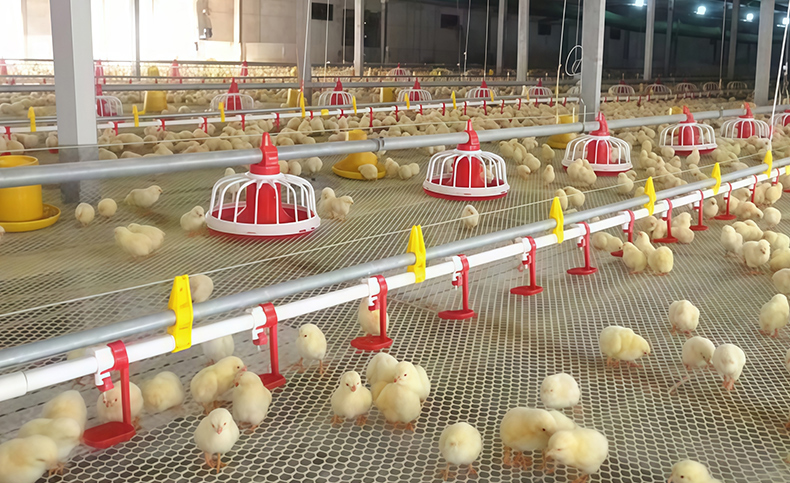
According to poultry industry management guidelines, proper drinking and feeding equipment directly affects broiler health and growth performance. Poultry Hub Australia points out that well‑designed automated feeding‑drinking systems improve animal welfare and reduce farm operating costs.
Layout Specifications of Broiler Nipple Water Lines
Each standard water pipe segment measures 3 meters. Nipple drinkers are installed at 4 or 5 pieces per meter. Lay out water pipes following pre‑planned routes inside the chicken house. Spacing between separate water lines should be 2- 4 meters, and you need to fine‑tune distances according to broiler breed and stocking density.
Many farmers encounter pollution issues when chickens stand and defecate directly on water pipes. Manure dropping onto drinker cups will contaminate drinking water, raise bacteria risks, harm broiler gut health, and even cause unnecessary flock losses. Besides pollution, chicken weight pressing down on bare pipelines may deform or crack water tubes.
That is why perch guard lines (two steel cables above water pipes) are essential parts. Perch guard lines prevent chickens from standing and defecating on pipes, avoid drinker contamination, and protect pipelines against crushing damage.
Core components of one full automatic water line:
- Balance pipe: works as the skeleton to support the whole water line
- Pressure regulator at starting end: adjusts water flow and effectively prevents nipple leakage
- Perch guard lines (steel cables): anti‑perching protection for water pipes
- Double‑pipe fixing clamps, perch guard brackets and other small fittings: every accessory delivers a unique function. Only with full accessories can the water line stay practical and durable.
How Floor‑Raised Broiler Feed Lines Realize Even Feed Distribution
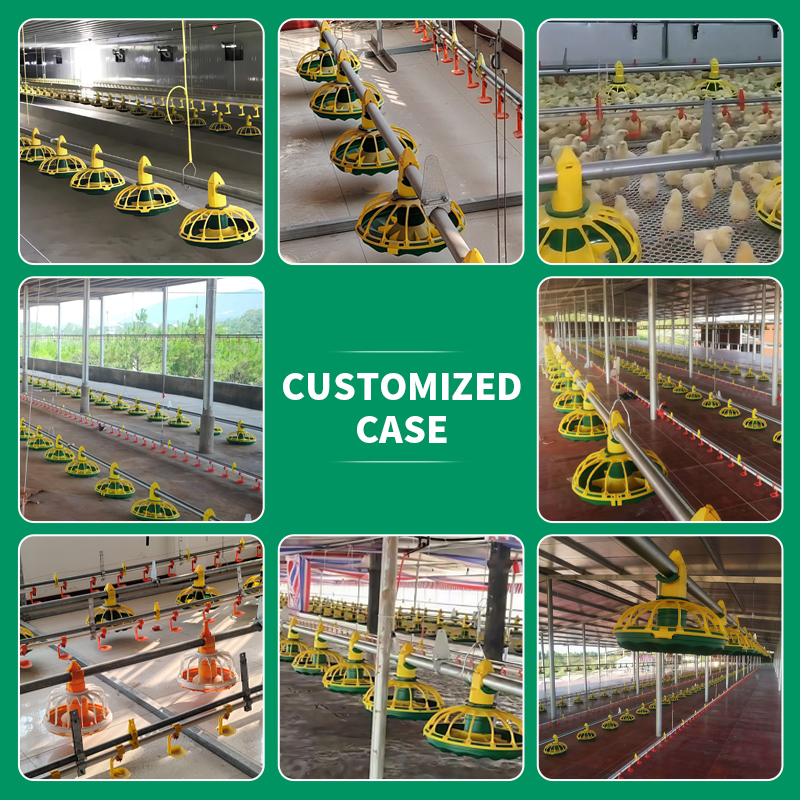
Floor‑raised broiler feed lines adopt an auger transmission structure for uniform feed delivery:
- The feed hopper is located at the front end of the secondary feed line;
- Feed tubes connect the whole line and are fixed with 45‑degree connectors;
- Feed pans are mounted every 75 cm to allow multiple broilers to eat simultaneously;
- A motor installed at the tail end drives the auger to send feed evenly to each feed pan;
- A mechanical feed pan near the motor supports higher‑precision automatic feed control.
Reasonable feed line collocation matches water line layout to maximize farm output.
Optimized Water & Feed Line Layout to Maximize Feeding Efficiency
Before arranging equipment, you need to master effective coverage width for each line:
- Single feed line effective coverage width: 4‑5 m
- Single water line effective coverage width: 3‑4 m
Standard floor‑raised broiler houses usually reach 12‑15 meters in width. The mature practical layout is 3 feed lines plus 4 water lines, evenly distributed inside the house.
For length limitation: single water line or feed line maximum length can reach 120 meters. Most poultry houses within 80 meters in length can adopt this system. Alternating arrangement of water lines and feed lines significantly improves broiler feeding and drinking efficiency. For whole‑house matching suggestions,
The FAO (Food and Agriculture Organization) also emphasizes that rational housing equipment layout is one key factor for successful intensive poultry farming.
Key Practical Notes For Poultry House Planning
- Always adjust water‑line spacing based on broiler breed and stocking density;
- Do not ignore small accessories such as clamps and perch guard brackets; missing fittings will shorten system service life;
- Check the pressure regulator regularly to avoid nipple leakage and wet litter problems;
- Alternate water‑feed line arrangement to reduce chicken moving distance for eating and drinking.
FAQ
- Q: How many nipple drinkers do I install per meter on broiler water line?
- A:4 or 5 nipple drinkers per meter; adjust according to bird age and stocking density.
- Q: What is a perch guard line used for?
- A: Perch guard lines stop chickens from standing and defecating on water pipes, prevent water source contamination, and protect pipelines from mechanical damage.
- Q: What layout fits a 12- 15 m wide floor‑raised broiler house?
- A: The common mature solution is 3 feed lines and 4 water lines evenly arranged inside the poultry house.
- Q: What is the maximum length for one water or feed line?
- A: Max length reaches 120 m; most farms under 80 m are well‑suited for this system.
A well-planned broiler nipple chicken water & feeding system helps farmers cut labor input, keep drinking water hygienic, and improve overall flock performance. Pay attention to both the main equipment and easy‑overlooked supporting accessories when building your poultry house.


