
Animal Marking Crayon: Types and Buying Guide
An Animal Marking Crayon is a practical tool widely used on cattle and livestock farms. It helps farmers identify animals, record vaccination information, manage daily farm activities, and monitor heat-related behavior.
However, different marking crayons are designed for different purposes. Some are more suitable for temporary marking, while others provide stronger adhesion, better water resistance, or special color-changing functions.
There are three common types of livestock marking crayons: water-based marking crayons, oil-based marking crayons, and color-changing oil-based marking crayons.
For livestock farmers, wholesalers, and agricultural equipment importers, understanding their differences can make product selection and purchasing decisions much easier.
1. What Is an Animal Marking Crayon?
An Animal Marking Crayon is a marking tool designed for use on the external surface of livestock. It is applied directly to the animal's coat to leave visible color marks.
Unlike ordinary writing crayons, livestock marking crayons are designed with practical farm requirements in mind, including adhesion, color visibility, marking duration, and performance under different environmental conditions.
On livestock farms, marking crayons can help workers distinguish animals, record management information, and support breeding management.
Depending on their formulation and function, these products can be divided into three main categories.
2. Water-Based Animal Marking Crayon
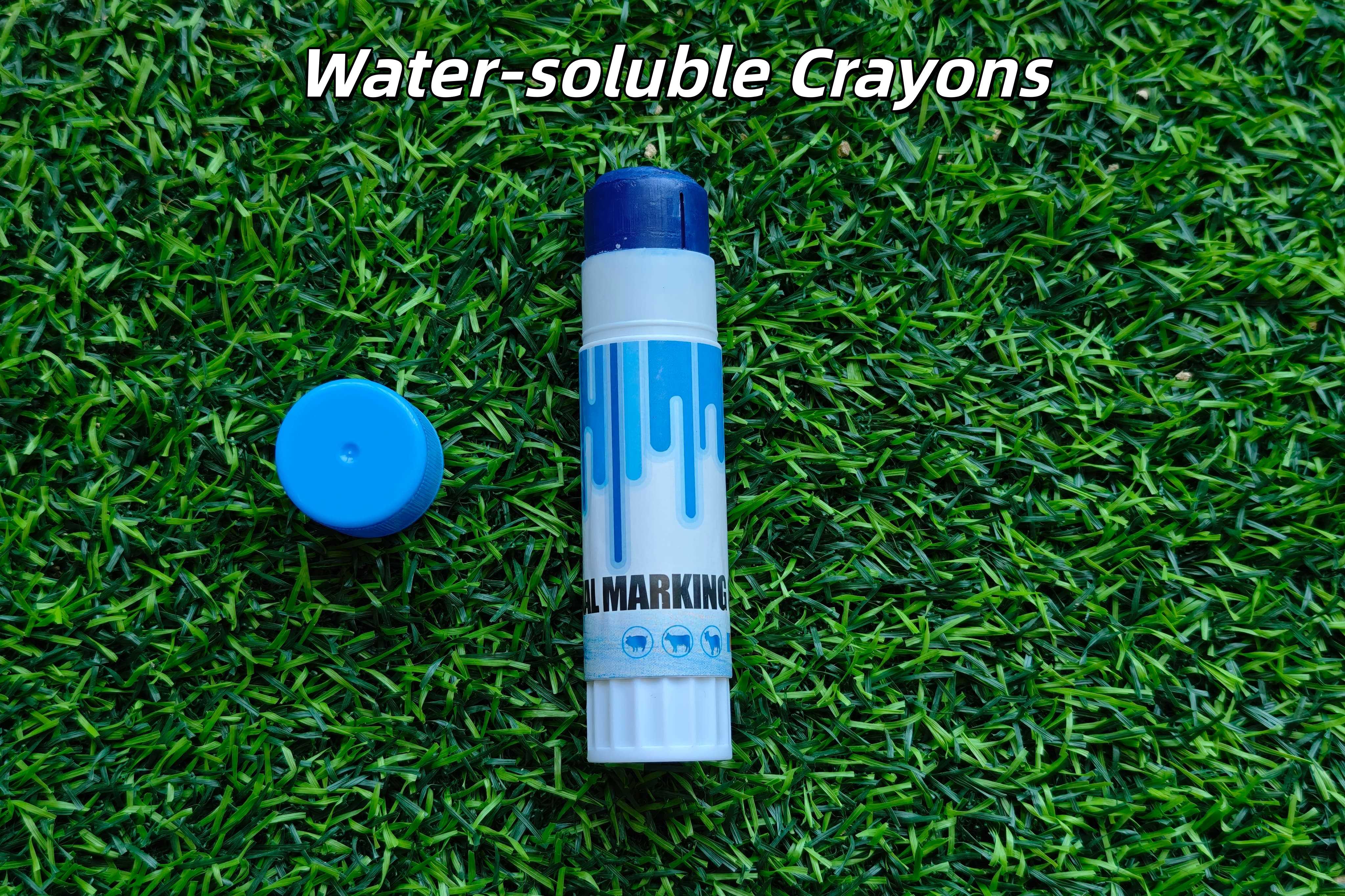
Water-based marking crayons are an economical solution for temporary livestock marking. They are popular among customers who need an affordable product for everyday farm management.
2.1 Main Advantages
One of the biggest advantages of water-based crayons is their affordable price.
For farms that need to mark a large number of animals for short periods, they offer a practical way to manage purchasing costs.
They are also easy to use. Farm workers can apply the crayon directly to the animal's coat without complicated procedures.
2.2 Limitations
Water-based marking crayons have relatively weak adhesion. Their markings typically last approximately 24 hours.
They are not waterproof, so rain, moisture, or wet conditions may reduce marking visibility.
Cold weather is another factor to consider. At low temperatures, the wax becomes harder and more brittle, which can make the crayon easier to break. Writing performance may also become less consistent.
2.3 Recommended Applications
Water-based marking crayons are suitable for short-term identification tasks, including:
- Marking cattle and sheep vaccination status.
- Temporary identification at livestock trading markets.
- Daily animal management and classification.
- Other farm activities that do not require long-lasting marks.
For buyers whose customers prioritize affordability and temporary marking, water-based crayons are a suitable option.
3. Oil-Based Animal Marking Crayon

Compared with water-based products, oil-based marking crayons are designed for stronger adhesion and longer-lasting marks.
They are a good option for livestock farms that need to monitor animals over several days or require more stable marking performance.
3.1 Main Advantages
Oil-based marking crayons provide stronger adhesion, with a typical marking duration of approximately 5-7 days.
They are also waterproof and less affected by ordinary wet conditions.
Under normal usage conditions, the markings are not easily removed. Even beyond the usual marking period, they are less likely to fade or rub off.
For cattle and pig farms, longer-lasting marks can reduce the need for repeated marking and make daily farm management more convenient.
Compared with water-based crayons, oil-based products are more suitable when marking stability and duration are important.
3.2 Why Are There Summer and Winter Versions?
Climate conditions vary significantly between different countries and regions.
High temperatures can affect the hardness and stability of marking crayons, while extremely cold temperatures can make some formulations harder and more difficult to apply.
Oil-based marking crayons can be formulated with different oil proportions to adjust their melting points and improve their suitability for different temperature conditions.
Summer Version
The summer version is designed for hot climates and is recommended for tropical and high-temperature markets, including many African regions.
It can resist melting in ambient temperatures of approximately 30-40°C.
For livestock farms and distributors operating in hot environments, the summer version is a suitable option to consider.
Winter Version
The winter version is designed for cold climates and is recommended for markets such as Russia and other cold regions.
It can be used normally at temperatures of around -40°C.
For farms operating in extremely cold winter conditions, choosing a suitable winter formulation helps reduce problems associated with excessive hardness and difficult application.
3.3 Recommended Applications
Oil-based marking crayons are mainly used for heat marking in cattle and pig farms. They can also be used for other livestock management tasks that require longer-lasting identification.
For customers who need stronger adhesion, water resistance, and longer marking duration, oil-based crayons are generally a better choice.
4. Color-Changing Oil-Based Animal Marking Crayon
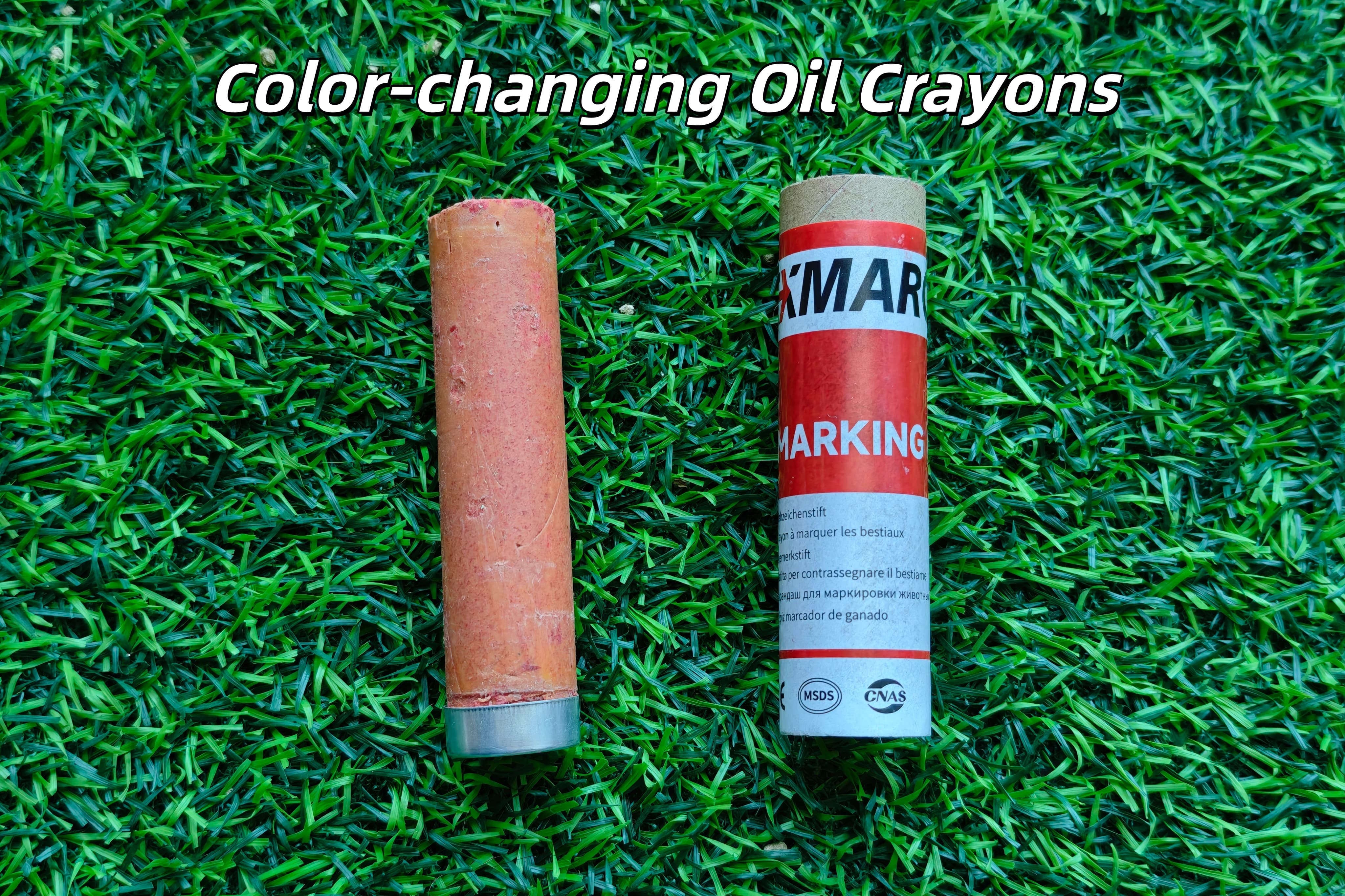
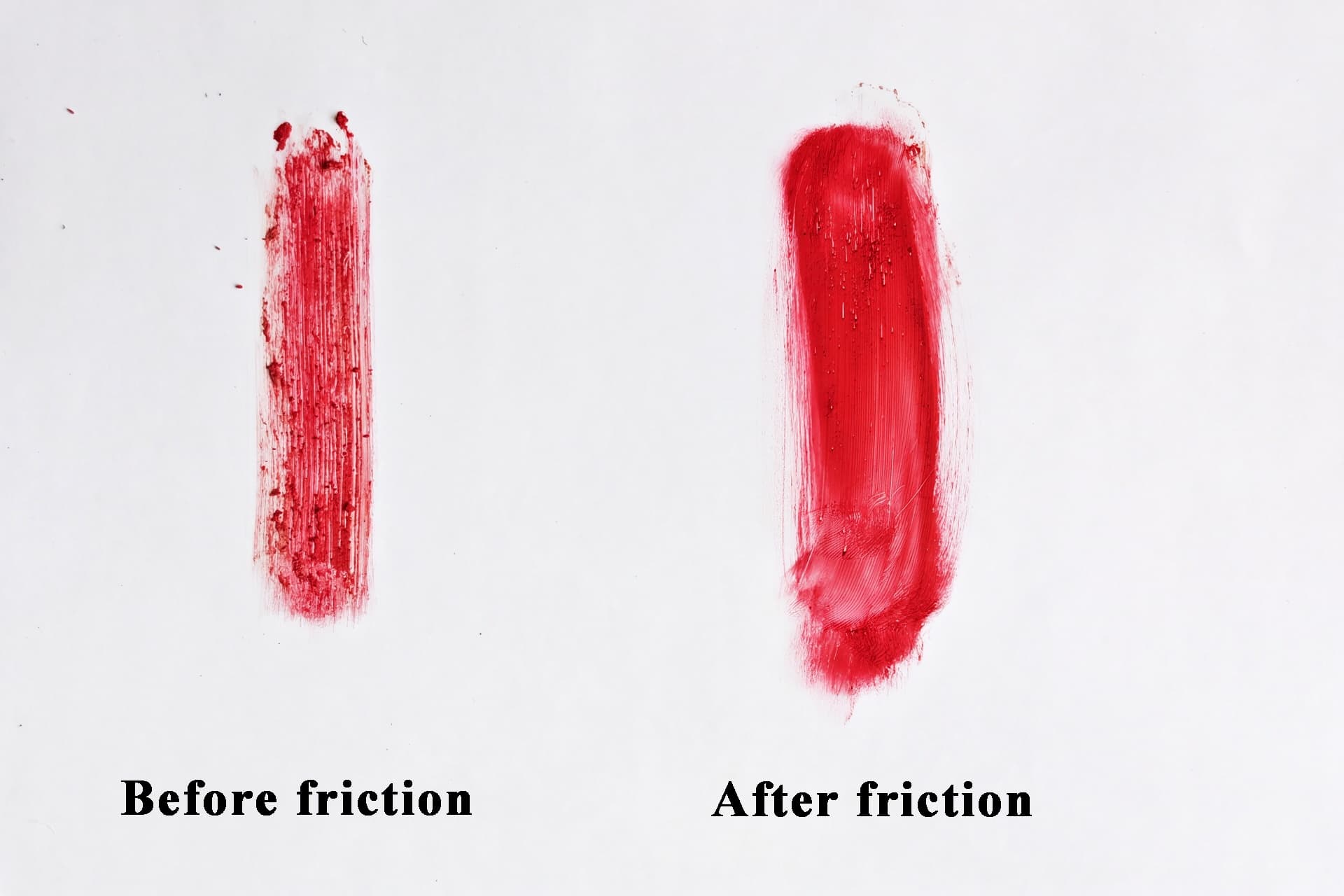
The main difference between a color-changing oil-based crayon and an ordinary marking crayon is its ability to change color through friction and heat.
This product is mainly designed for heat detection in cattle farms.
While ordinary crayons are used to leave visible marks, color-changing crayons provide additional visual information through changes in the marking.
4.1 How Does It Work?
The color-changing crayon is applied to a designated area near the base of the cow's tail.
When a bull mounts the cow, friction and heat are generated around the marked area. This causes the marking to change color.
Farm workers can observe these changes as an additional indication of mounting activity.
This provides a convenient visual aid for monitoring cattle activity and supporting everyday breeding management.
4.2 Main Advantages
- Changes color through friction and heat.
- Helps farm workers observe mounting activity.
- Suitable for cattle breeding management.
- Offers a more specialized application than ordinary marking crayons.
4.3 Recommended Applications
Color-changing oil-based crayons are mainly used for heat detection and breeding management on cattle farms.
They are particularly suitable for farms that need to monitor cow activity and identify possible mounting events.
Please note that color changes are an additional observation indicator and should not replace professional heat detection methods.
5. What Are the Differences Between the Three Types?
Before choosing an Animal Marking Crayon, it is useful to compare the main characteristics of each product.
| Comparison | Water-Based | Oil-Based | Color-Changing Oil-Based |
|---|---|---|---|
| Main Feature | Affordable | Strong adhesion and waterproof | Color change through friction and heat |
| Marking Duration | Approx. 24 hours | Approx. 5-7 days | Depends on usage and observation |
| Water Resistance | Not waterproof | Waterproof | Refer to product specifications |
| Temperature Options | Limited performance in cold conditions | Summer and winter versions | Refer to product specifications |
| Main Application | Temporary marking | Heat marking in cattle and pig farms | Heat detection in cattle farms |
In simple terms:
Choose water-based crayons for affordable, temporary marking.
Choose oil-based crayons when longer marking duration and water resistance are important.
Choose color-changing oil-based crayons for specialized heat detection applications in cattle farms.
6. How to Choose Marking Crayons for Different Markets?
For wholesalers, importers, and livestock equipment distributors, product selection should consider the climate and requirements of the target market.
6.1 African and Other Hot Markets
High temperatures are an important consideration in these regions.
Buyers should pay particular attention to the summer version of oil-based marking crayons.
For customers who need to store, transport, and use products in hot environments, temperature stability is an important purchasing consideration.
6.2 Russia and Other Cold Markets
For markets with extremely cold winters, the winter version of oil-based marking crayons is recommended.
Some ordinary formulations may become harder at low temperatures, making application less convenient.
Choosing a product designed for cold conditions can help address these challenges.
6.3 General Livestock Markets
For customers who mainly need temporary marking for vaccination records or livestock trading, water-based crayons may be sufficient.
For customers who need longer-lasting marks, oil-based crayons are a more suitable option.
7. What Should Wholesalers and Importers Consider?
For B2B buyers, selecting the right livestock marking crayon involves more than comparing unit prices.
Understanding the target customers and their actual applications is equally important.
First, identify your target customers.
Are you supplying general livestock farms, cattle farms, pig farms, or agricultural equipment distributors?
Different customers have different requirements, so your product range should reflect their needs.
Second, understand the local climate.
For hot markets such as many African regions, consider summer oil-based crayons. For cold markets such as Russia, pay more attention to winter versions.
Third, choose a suitable product combination.
Offering water-based, oil-based, and color-changing products allows wholesalers to serve customers with different budgets and applications.
Fourth, pay attention to product quality and batch consistency.
For bulk purchasing, consistent color, adhesion, hardness, and application performance are important.
Stable product quality helps distributors maintain customer confidence and develop long-term business relationships.
8. Frequently Asked Questions
Q1: What is an Animal Marking Crayon used for?
It is mainly used for temporary livestock identification, vaccination records, farm management, and heat detection. Different types are designed for different applications.
Q2: Which is better, water-based or oil-based marking crayon?
Both have their advantages. Water-based crayons are more affordable and suitable for temporary marking. Oil-based crayons offer stronger adhesion, water resistance, and longer marking duration. The right choice depends on the intended application.
Q3: What is the difference between summer and winter oil-based crayons?
They are formulated for different temperature conditions. The summer version is designed for hot environments around 30-40°C, while the winter version can be used in cold conditions around -40°C.
Q4: Which farms need color-changing oil-based crayons?
They are mainly used on cattle farms for heat detection and breeding management. Friction and heat cause the marking to change color, helping farm workers observe mounting activity.
Q5: Which type should wholesalers purchase?
The choice depends on the target market, local climate, and customer requirements. Wholesalers serving different customer groups may consider offering several types to cover a wider range of applications.
9. Conclusion
Choosing the right Animal Marking Crayon requires considering marking duration, adhesion, water resistance, temperature conditions, and actual farm applications.
Water-based crayons are suitable for economical temporary marking. Oil-based crayons are a better choice when longer-lasting marks are required. Color-changing oil-based crayons are designed for heat detection in cattle farms.
For livestock farmers, wholesalers, and importers, understanding these differences makes it easier to select products that match real market requirements.


